This is a SEO version of Journal of Laser Dentistry 1. Click here to view full version
« Previous Page Table of Contents Next Page »brightens teeth from the outside in, internal bleaching brightens teeth from the inside out. Bleaching the tooth internally involves drilling a hole to the pulp chamber, cleaning, sealing, and filling the root canal with a rubber-like substance, and placing a peroxide gel into the pulp chamber so the gel can work directly inside the tooth on the dentin layer. In this variation of whitening the peroxide is sealed within the tooth over a period of some days and replaced as needed, the so called "walking bleach" technique.
Agents
Various chemical and physical agents can be used to whiten teeth. Toothpaste typically has small particles of silica, aluminum oxide, calcium carbonate, or calcium phosphate to grind off stains formed by colored molecules that have adsorbed onto the teeth from food. Unlike bleaches, whitening toothpaste does not alter the intrinsic color of teeth.
Bleaching solutions contain peroxide, which bleaches the tooth enamel to change its color. Off-the-shelf products typically rely on a carbamide peroxide solution varying in concentration from 10% to 44%. Bleaching solutions may be applied directly to the teeth, embedded in a plastic strip that is placed on the teeth or use a gel held in place by a mouthguard. Because the concentration is typically low to avoid toxicity, whitening often takes several weeks. A tooth whitening agent that also remineralizes teeth is under development.
1
Dr. Valter Pirazzoli
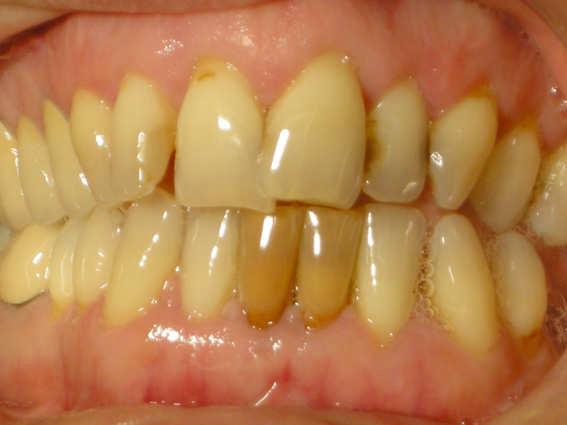
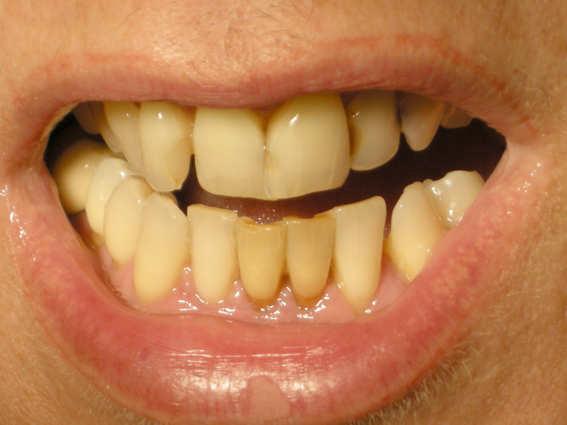
Laser Setting
Diode Laser 810nm
Power: 2.0 Watt, CW
Bleaching Handpiece
This is a SEO version of Journal of Laser Dentistry 1. Click here to view full version
« Previous Page Table of Contents Next Page »